Slip resistance is an important consideration when specifying flooring for commercial environments. From hospitality and leisure spaces to workplaces, retail settings and public buildings, the choice of floor surface needs to account for how a space will be used, the conditions it will encounter and the people moving through it.
The Pendulum Test Value (PTV) provides a recognised method of assessing the slip potential of flooring surfaces. Understanding how these results are measured and interpreted can help architects, designers and specifiers make more informed decisions when selecting floor tiles for commercial projects.
What is a PTV rating?
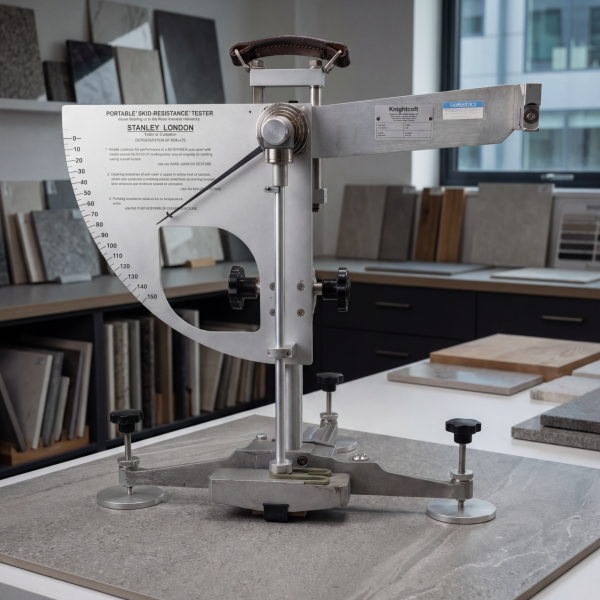
PTV stands for Pendulum Test Value. It is a measurement obtained using the pendulum slip resistance test, which assesses the interaction between a standardised rubber slider and a floor surface.
During testing, a weighted pendulum swings across the surface, with the resistance encountered by the rubber slider determining the resulting value. The test can be carried out under different conditions, including dry and wet, to provide an indication of the surface’s slip potential.
The pendulum method is recognised by the UK Health and Safety Executive (HSE) as a reliable approach to assessing floor slipperiness. Its use is covered by BS EN 16165:2021, which replaced BS 7976 in 2021. Results should be obtained and interpreted by suitably trained and competent operators.
Understanding the rubber sliders
Different rubber sliders are used depending on the intended conditions of use:
Slider 96 (4S): Generally used to assess flooring for pedestrians wearing shoes and is appropriate for most everyday commercial environments.
Slider 55 (TRL): Used when assessing barefoot areas, such as swimming pools and changing facilities.
The choice of slider is important because testing should reflect the conditions and type of pedestrian use anticipated in the finished environment.
Understanding PTV results
PTV results are commonly interpreted using the UK Slip Resistance Group’s classification of slip potential:
Pendulum Test Value
Slip potential
0–24
High
25–35
Moderate
36 or above
Low
A wet PTV of 36 or above is commonly used as a benchmark when assessing slip resistance for level commercial flooring applications.
However, a PTV result should not be treated as a universal pass or fail. It indicates slip potential under the specific test conditions and should be considered alongside the intended application, surface characteristics and anticipated conditions of use.
A higher level of slip resistance is required on a sloping surface than on the level to achieve the same degree of safety. Add the gradient percentage to the base PTV requirement.
Examples: • 1:20 Slope (5%) = Add 5 to target PTV • 1:12 Slope (8.3%) = Add 8.3 to target PTV Note on Wet Zones: Shower zones sloped at 2% require an increased minimum of 38 PTV (based on a 36 PTV base requirement for level surfaces)
Why does slip resistance matter when specifying commercial tiles?
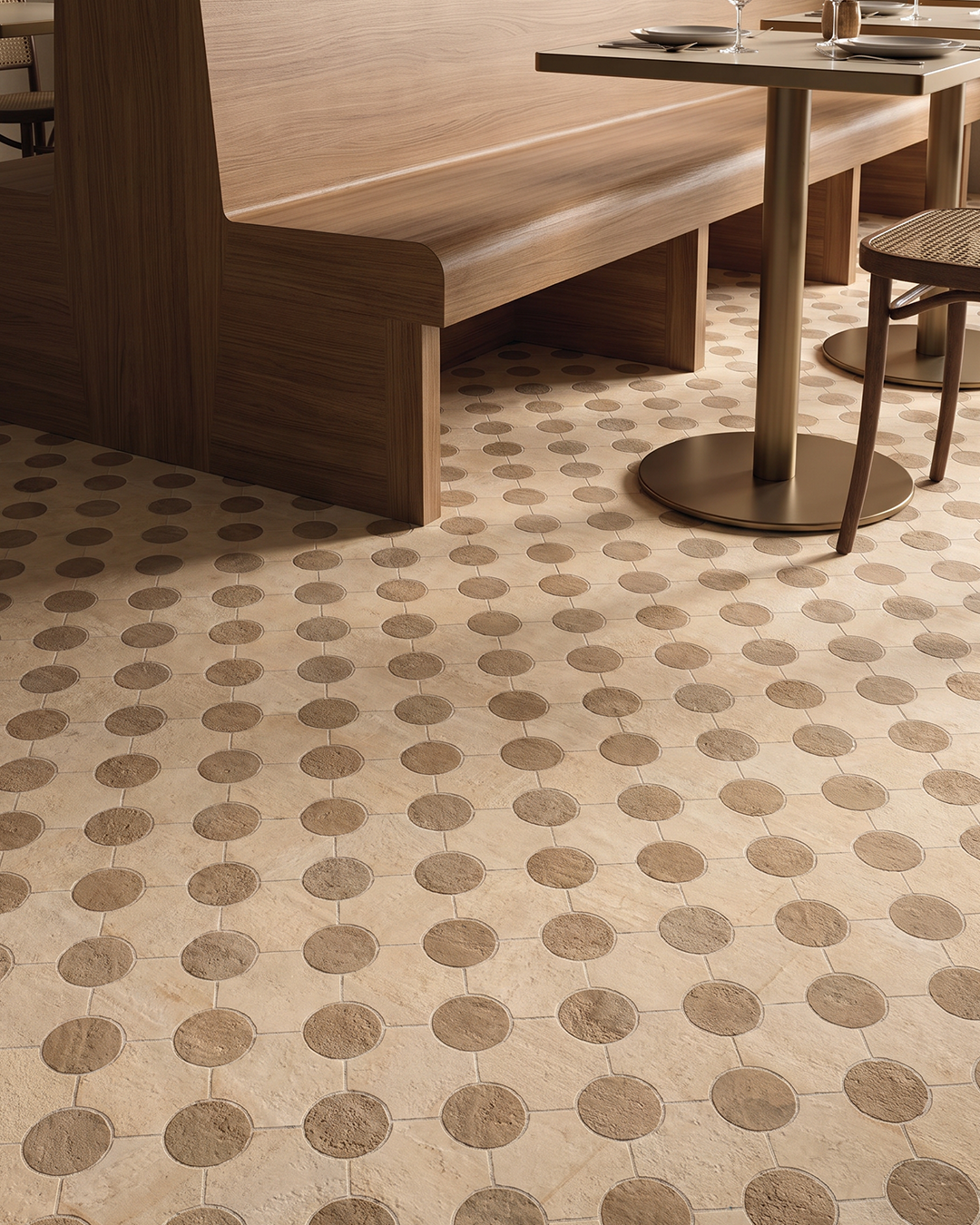
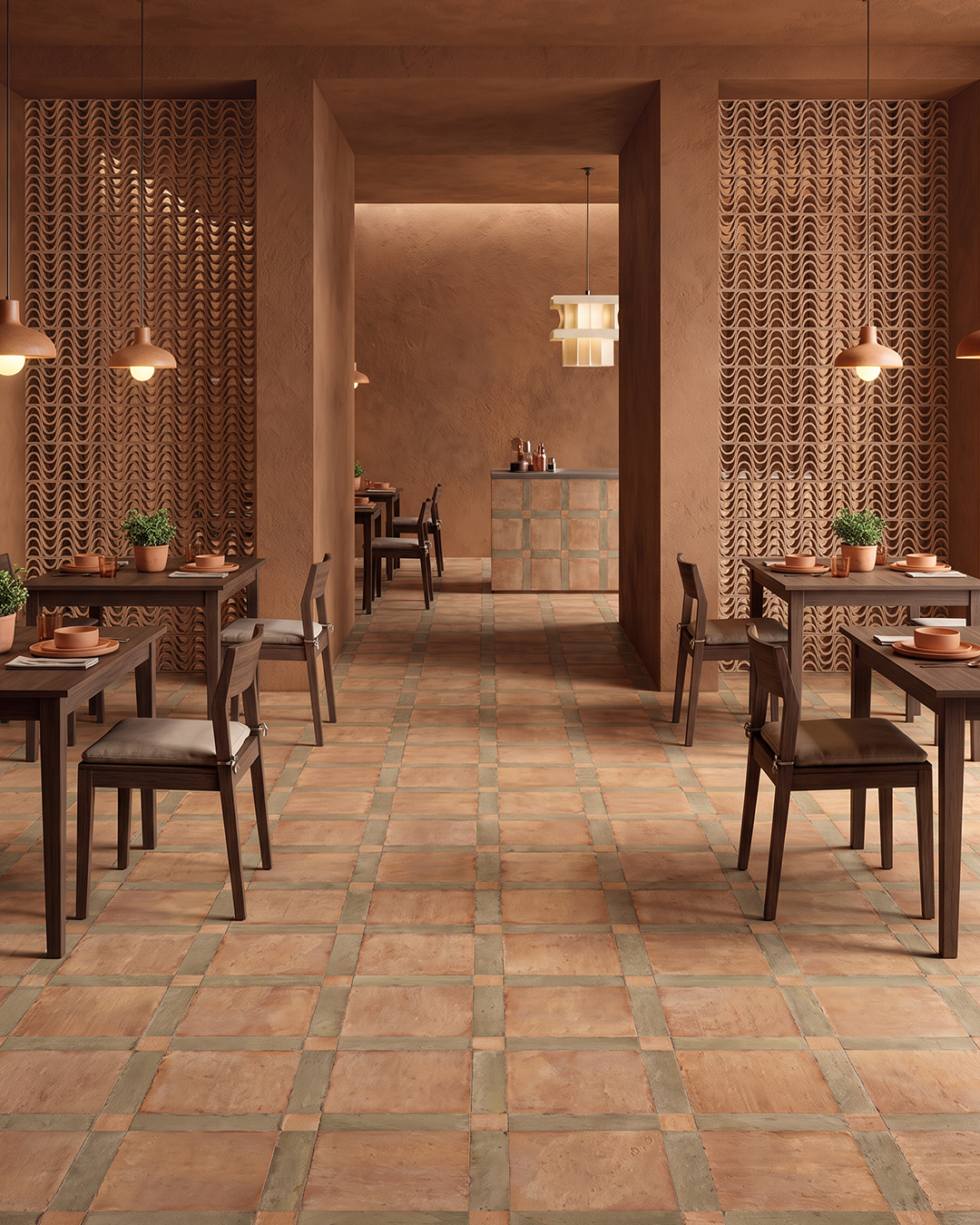
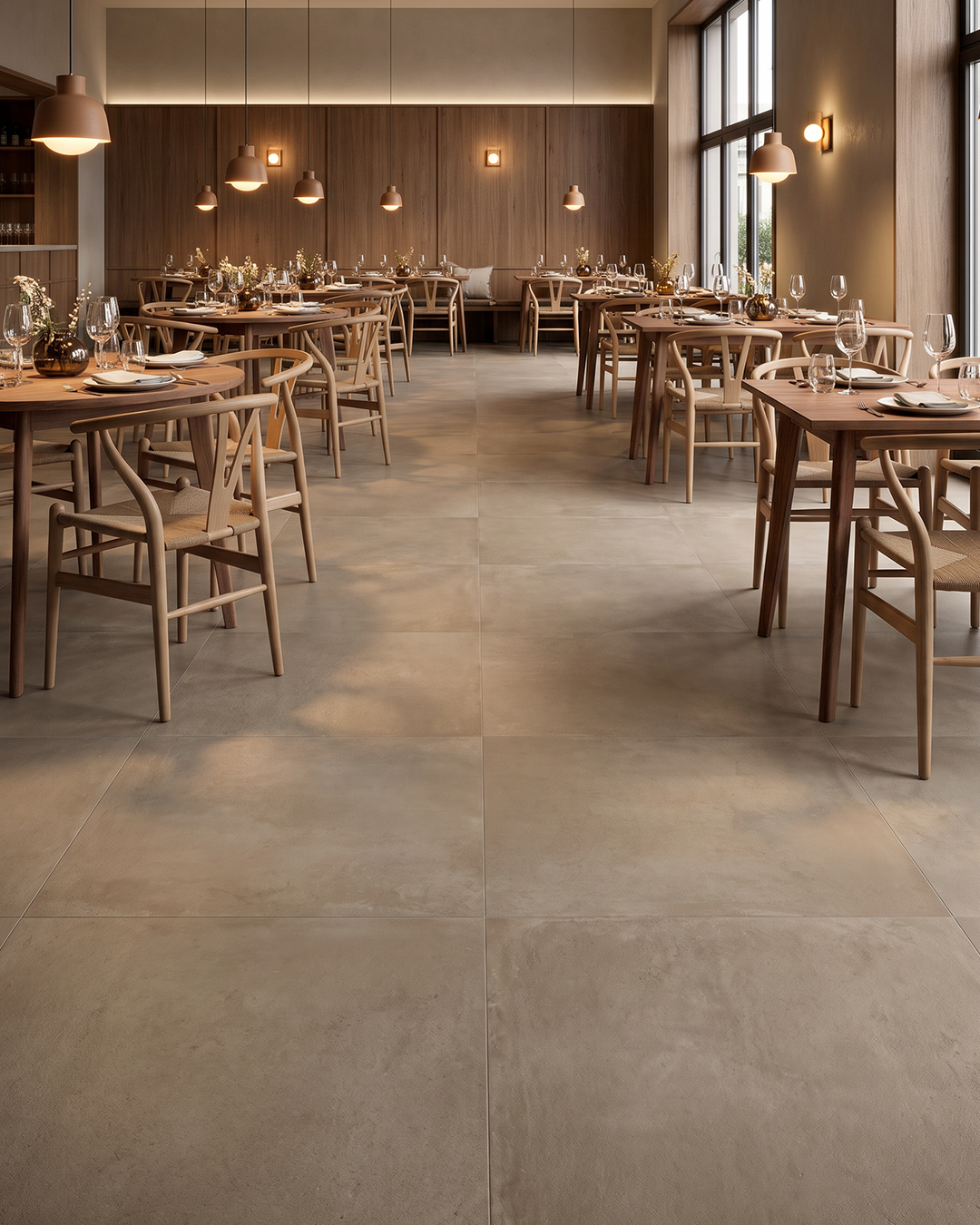
Different commercial environments place different demands on floor surfaces. A restaurant entrance, hotel bathroom, retail space and commercial kitchen will each experience different levels of foot traffic, moisture and potential contamination.
When assessing a tile for a particular application, consider:
Expected use and foot traffic
The volume and type of pedestrian movement can influence the demands placed on a floor. Busy circulation areas may require different considerations from quieter internal spaces.
Exposure to moisture and contaminants
Entrances, washrooms, changing facilities and food preparation areas may be exposed to water, cleaning products, oils or other substances. Testing should reflect the conditions anticipated in use.
Cleaning and maintenance
A floor’s performance depends partly on how it is maintained. Cleaning regimes, residue build-up and the suitability of cleaning products can all influence surface conditions over time.
What should specifiers look for?
When reviewing technical information for commercial floor tiles, it is important to look beyond a single performance figure.
Consider the following:
Test method: Check which test method has been used and whether the results are appropriate for the intended application.
Test conditions: Establish whether results relate to dry or wet conditions and which rubber slider was used.
Intended environment: Consider the expected footwear, moisture exposure, contaminants and patterns of use.
Supporting documentation: Request relevant technical data and independent test reports where appropriate.
Installation and maintenance: Ensure the wider flooring specification accounts for installation requirements and ongoing cleaning.
PTV results should also not be confused with R ratings or other slip resistance classifications. These are generated using different test methods and should not be treated as directly interchangeable.
A considered approach to flooring specification
Slip resistance should form part of a wider assessment of flooring suitability, alongside durability, aesthetics, maintenance and the practical requirements of the space.
The right tile specification will depend on the environment, its intended use and the conditions the finished floor is expected to encounter. Where there is uncertainty, independent testing and specialist advice can help inform the decision.
At Grestec, technical performance is an important consideration across our commercial tile collections. All new Grestec floor ranges are selected to meet a minimum wet PTV of 36, supporting specification across a variety of commercial interiors.
For projects with more demanding external applications, a higher level of slip resistance may be appropriate. Grestec recommends considering a wet PTV of 42 or above as a starting point for external flooring, subject to project-specific assessment and the conditions of use.
Technical support from Grestec
Selecting the right flooring involves balancing design intent with the technical requirements of the project. Our team can assist with product information, technical documentation, samples and guidance on suitable tile collections.